




The Europe Entry/Exit System (EES) has changed the border experience for many international travelers, giving travel advisors another important topic to address when preparing clients for European travel.
The Europe Entry/Exit System (EES) is now fully operational, changing the way many international visitors are processed when entering and leaving the Schengen Area.
For travelers, the most noticeable difference may occur at passport control. For travel professionals, the opportunity is to set expectations before clients ever arrive at the airport.
What Is the Europe Entry/Exit System?
The Entry/Exit System is an automated border management system used to register non-EU nationals traveling to participating European countries for short stays.
EES began a progressive rollout in October 2025 and became fully operational on April 10, 2026.
Instead of relying on passport stamps to document a traveler’s movements, EES creates an electronic record of border crossings. The system records information including the traveler’s passport data, facial image, fingerprints, and the date and location of entry and exit.
For most short-term visitors, the familiar 90-days-within-a-180-day-period rule continues to apply. EES gives border authorities a digital method of tracking those stays.
Who Is Affected by Europe’s Entry/Exit System?
EES generally applies to non-EU nationals visiting the Schengen Area for a short stay, whether they are traveling visa-free or with a short-stay visa.
That means many clients traveling from countries outside the European Union will encounter the system during European vacations, cruises, business trips, family visits, and other short stays.
EU citizens and nationals of Iceland, Liechtenstein, Norway, and Switzerland are outside the EES registration requirement. Certain other categories of travelers are also exempt.
For advisors, nationality and residency status remain important considerations when discussing entry procedures with clients.
What Travelers Can Expect From EES at the Border
For a traveler completing EES registration for the first time, the process can involve providing passport information along with a facial image and fingerprints. Depending on the airport or border crossing, travelers may encounter kiosks, self-service technology, or other automated processes as part of the experience.
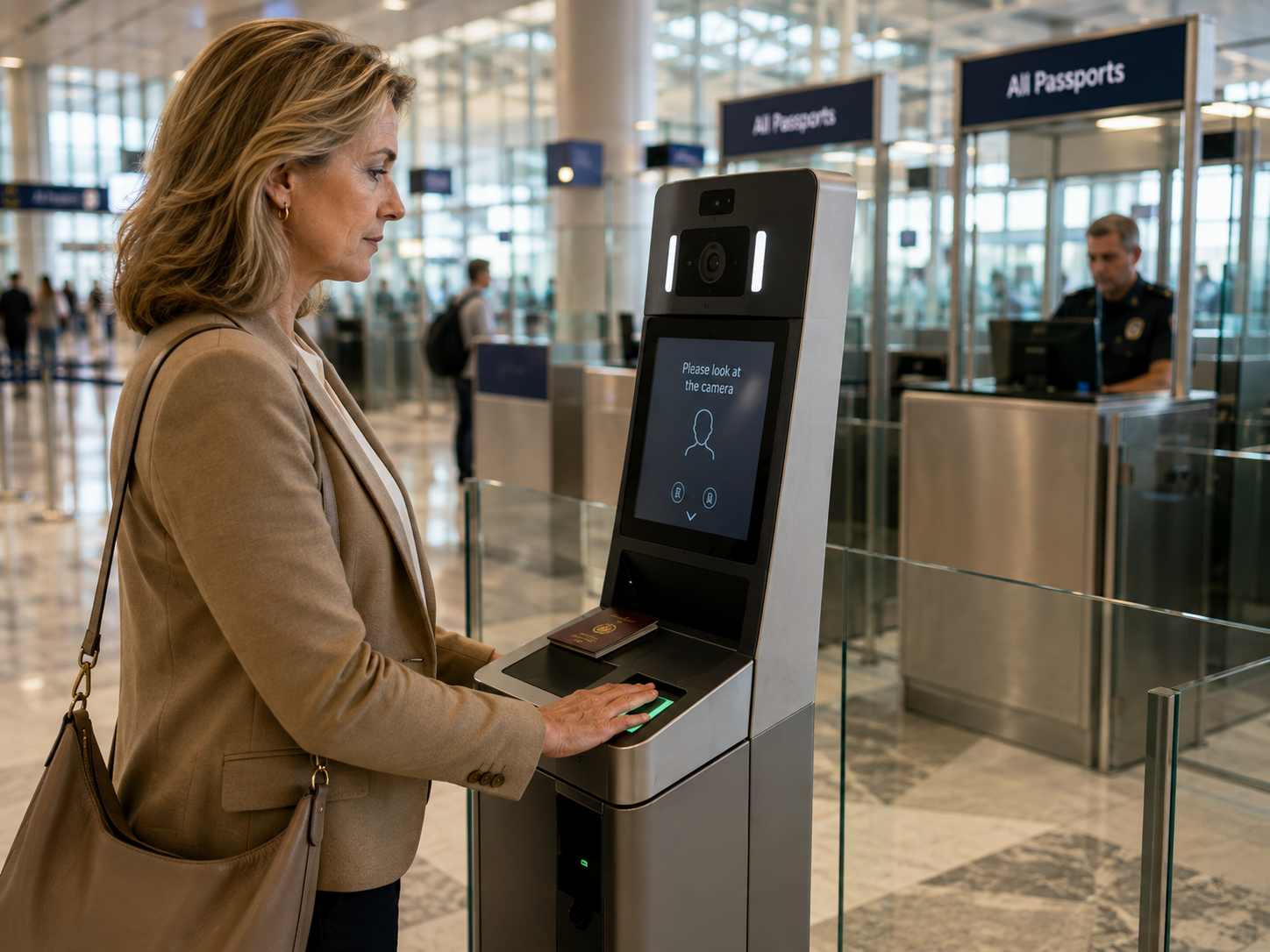
First-time EES registration may include passport scanning, facial-image capture, and fingerprint collection at European border control.
Once a traveler’s information has been registered, subsequent crossings generally involve verification against the information already stored in the system.
Travelers will still interact with border authorities, and admission remains subject to the applicable entry requirements.
For travel advisors, understanding how the Europe Entry/Exit System affects the airport experience can help set clearer expectations before clients depart.
One practical recommendation is simple: build additional time into the journey.
Technology may ultimately make border processing more efficient, but unfamiliar procedures can create questions and varying processing times. Clients connecting through major European gateways should understand that passport control can affect the amount of time available for an onward connection.

Travelers connecting through major European airports should allow comfortable connection times as new border procedures can affect the journey.
How EES Changes Passport and Entry Records
For seasoned European travelers, the disappearance of routine passport stamps may be one of the most visible changes.
EES digitally records entries and exits, allowing authorities to calculate authorized stays and identify travelers who remain beyond their permitted period.
This makes accurate itinerary planning particularly important for clients taking extended European trips, combining multiple visits, or spending significant time within the Schengen Area.
Travel advisors do not need to become border-control specialists. They can, however, encourage clients with complex travel histories to confirm their remaining permitted stay through official European resources before departure.
Europe’s Entry/Exit System vs. ETIAS
This distinction is worth emphasizing with clients.
EES is a border registration system. It records qualifying travelers when they cross an external Schengen border.
ETIAS is a separate travel authorization system that is expected to begin in the last quarter of 2026. Once implemented, ETIAS will require eligible visa-exempt travelers to obtain travel authorization before traveling to participating European countries.
In practical terms, travelers should think of EES as part of the border-crossing process. ETIAS, once launched, will become part of pre-trip preparation for travelers who fall within its requirements.
Travel professionals should continue monitoring official European Union announcements for the confirmed ETIAS launch date and implementation guidance.
How Travel Advisors Can Prepare Clients for EES
1. Introduce EES during pre-travel conversations.
A short explanation before departure can make an unfamiliar border process feel much more manageable when the client arrives.
2. Encourage comfortable connection times.
When an itinerary requires immigration or passport control before an onward flight, consider the potential impact of border-processing time when evaluating connection options.
3. Remind travelers to keep passports accessible.
Clients should be prepared to follow the instructions of border officials and use any designated registration or self-service equipment.
4. Pay particular attention to complex European itineraries.
Extended stays, frequent visits, and trips spanning multiple countries can make the 90/180-day calculation especially important.
5. Direct clients to official sources for entry requirements.
Requirements can depend on nationality, residency status, visa status, and individual circumstances. Official government and European Union resources should remain the authority for determining eligibility to travel.
Where Airport Assistance Can Add Value
Changes in border procedures are another reminder that the airport experience is an important part of the overall journey.
Travelers may be navigating a large international airport after an overnight flight, making a connection in an unfamiliar terminal, traveling with family members, or simply facing a process they have never encountered before.

Airport assistance can provide travelers with personalized support as they navigate the airport journey after completing required border procedures.
Airport meet-and-assist services can provide an added layer of support through the airport journey, subject to local airport procedures, access rules, and government requirements. Airport assistance does not replace immigration procedures or determine a traveler’s eligibility to enter a country. Travelers remain responsible for carrying and presenting the documents required by airlines, airports, and government authorities.
For travel advisors, airport assistance can be considered as part of the broader client experience, particularly when an itinerary involves unfamiliar airports or complicated connections.
The Advisor’s Role Is More Valuable Than Ever
EES is part of a broader modernization of European travel and border management. For clients, these changes add another set of terms and procedures to understand. For travel professionals, they create another opportunity to demonstrate the value of thoughtful preparation.
As travelers become more familiar with the Europe Entry/Exit System, proactive communication from travel advisors can make these new procedures easier to understand and navigate.
A traveler who knows what to expect can arrive with greater confidence. An advisor who considers the airport experience alongside flights, hotels, transfers, and activities can help create a more complete journey from beginning to end.
As Europe’s travel requirements continue to evolve, Airport Assistance Worldwide will continue helping travel professionals support their clients through the airport experience.
Planning European travel for your clients? Contact Airport Assistance Worldwide to explore airport assistance options for upcoming itineraries.
Travel requirements and border procedures are subject to change. Travelers and travel professionals should verify current entry requirements through official government and European Union sources before travel. Airport Assistance Worldwide does not determine or guarantee a traveler’s eligibility for entry.
Continue Reading: Discover the story behind Airport Assistance Worldwide and how decades of experience have shaped the airport assistance we provide to travel professionals and their clients today.
Some images in this article were created with the assistance of AI for illustrative purposes.
Recent Comments